The Myth That a Big Finale Needs a Surprise
A satisfying finale does not need a last-minute twist. Learn how returning to an established theme can make an ending feel clear, earned and complete.
The common mistake with a big finale is saving a surprise for the last possible moment, as if the audience will leave dissatisfied unless the story swerves. That can cost a performance its clearest reward: the pleasure of recognising what it has been building towards. A finale can land firmly by returning to an established theme, image or musical phrase and letting its meaning change.
This is not an argument for predictable endings. It is a distinction between surprise and satisfaction. A surprise supplies new information; a satisfying close makes the information, emotion or pattern already in play feel complete. A deliberate return can do that work without making the ending feel inevitable.
How can a finale change the meaning of a theme?
A theme is more than a slogan. It may be a question the show keeps asking, a value its characters argue over, or a recurring idea such as belonging, ambition or forgiveness. A finale can return to that concern without delivering a neat answer. The audience hears the question again, now with the consequences of the story attached.
Suppose a drama repeatedly asks whether loyalty means staying or telling the truth. If the final scene returns to that question, the characters’ choices give it weight. A newly revealed villain or secret may be dramatic, but it is not required to make the question feel answered. The ending can show what loyalty has come to mean for these particular people.
The return works best when the theme has been present in action, not merely stated in dialogue. If characters have repeatedly chosen convenience over honesty, a final honest choice can close the pattern. The principle is familiar, but its cost is now visible.
When should a recurring image return?
Props, gestures and visual arrangements can carry a theme more quietly than a speech. A door left open, a chair repeatedly moved aside, or a character who avoids looking at the audience can become meaningful through repetition. Bringing one such detail back in the finale lets the ending speak in the format’s own visual language.
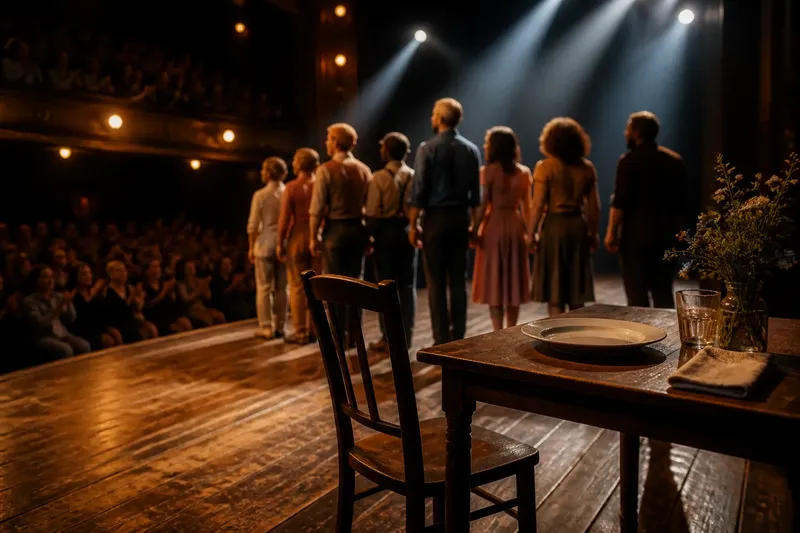
Say a playwright invents a drama in which a character keeps setting an extra place at a crowded table, though nobody sits there. In the imagined final scene, the character has made peace with an absent friend and sets a place for a visitor who is actually expected. The observable result is a changed relationship to absence, shown through the table rather than explained in a speech.
A recurring image should not be treated like a code the audience must crack. Repetition makes it legible; placement gives it emphasis. If a detail has appeared only once, bringing it back at the end may feel like an instruction to admire the symbolism. If it has been part of the show’s ordinary visual life, the return can feel like recognition.
How does a reprise alter the emotional emphasis?
Musicals, sketch shows and other performance forms can return to a song, line or rhythm the audience already knows. A reprise need not reproduce the earlier moment. A changed tempo, a different speaker, or a line delivered without its former joke can make familiar material carry a new emotional charge.
This is why a reprise can feel more complete than a brand-new closing number. The audience can compare the ending with the earlier version without being asked to learn another piece of information. The musical material supplies continuity; the performance supplies the difference. A bright refrain may sound rueful after a character has lost something, while an earlier complaint may become affectionate when the group sings it together.
The choice requires restraint. Repeating every line, image and arrangement can make the ending feel like a replay rather than a resolution. A selective return—a phrase, a motif, a familiar rhythm—lets the audience make the connection. It is like recognising a tune from the next room: the source is familiar, but the new setting changes what it seems to say.
What can a performance pattern resolve?
A finale has to settle the audience’s sense of the performance, but it does not have to tie every practical thread into a bow. A recurring pattern may matter more than a minor question about what happens next. If a character has spent the show interrupting others, the ending might let someone else hold the floor. If a comic routine has relied on a boast that keeps failing, the finale can return to the boast and reveal what the character has finally understood.
This approach is useful in ensemble entertainment, where not every character can receive a separate closing speech. A shared gesture, a group response or a final exchange can resolve the show’s central dynamic while leaving individual futures open. The point is not to conceal missing information. It is to distinguish the audience’s need for emotional shape from its appetite for a complete inventory of outcomes.
When a recurring pattern is part of the pleasure, its final appearance should feel like a decision rather than an automatic encore. A joke can return with a different target; a familiar entrance can be refused; a repeated argument can end because somebody listens. The form stays recognisable, while the behaviour inside it changes.
How can a finale make a return clear?
Recognition takes a moment. If the finale races from one reveal to another, the audience may understand each event but have little time to feel the connection between them. A pause, a held look or a familiar phrase delivered plainly can make the return readable. The pause need not be long; it needs to leave space for the audience to catch up.
This is not the same as explaining the motif. A character announcing that “we have come full circle” usually does the audience’s work for it. A small cue is often enough: the same place on stage, the same opening words, or the same musical figure. Trust the repetition to carry the link, then let the next action show what has changed.
Clarity also matters in live performance. A callback that depends on a detail hidden from much of the room can turn recognition into a test of seating position. Keep the returning element audible or visible enough to register, and avoid burying it under applause, a scene change or an unrelated flourish.
What should the final image leave behind?
The final image does not have to explain the whole story. It should, however, belong to the story’s established vocabulary. Returning to a familiar arrangement can make a closing moment feel intentional: the audience sees where the performance began, or what it kept circling, and notices the difference now.
A final image can also prevent a tonal wobble. A show may reach its emotional peak and then add a last joke, twist or announcement simply to keep the room lively. Sometimes that extra beat is right; sometimes it asks the audience to start feeling something else after the ending has already arrived. A return to an established image can provide a quieter landing without turning the close into a lecture.
The most useful question is not “What can we reveal at the end?” but “What has the audience been taught to notice?” The answer may be a phrase, a choice, a rhythm, a relationship or a way of looking at the world. Bring that element back with enough change to show the journey and enough familiarity to make the connection clear. A big finale can surprise, but it does not owe surprise a place in the running order.
What makes a returning theme feel earned?
How often should a theme appear before the finale?
Often enough for the audience to recognise its presence, but not so often that every appearance feels like a signpost. Let the theme emerge through varied choices, images or exchanges, rather than repeating the same explanation.
Can a finale return to a joke and still feel moving?
Yes, if the joke’s context or target has shifted. A comic refrain can expose a new tenderness or an old habit the characters now see clearly; the performance should carry that change rather than announce it.
Does every story need to resolve its central theme?
No. A finale can leave a question open while showing how the characters now face it. What matters is that the ending feels connected to the question the work actually raised, rather than substituting an unrelated surprise.
Is a twist ever the right ending?
A twist can work when it grows from the show’s established concerns and changes how earlier material reads. It is less persuasive when it appears chiefly to prove that the finale is important. Returning to an established theme is not a ban on surprise; it is a reminder that recognition can be a climax too.