Headshot or Publicity Portrait: Two Different Jobs
Headshot or publicity portrait? Learn how pose, setting and emphasis should differ so each image serves its purpose without sending mixed signals.
The common mistake with a headshot or publicity portrait is asking one image to do both jobs. A headshot should help someone identify and recognise a performer; a publicity portrait should give an audience a reason to imagine them in a particular role, project or public persona. Confuse the aims, and the result can be too theatrical for a casting file yet too anonymous for a press release.
The distinction is not simply plain background versus fancy background. It is a question of what the image asks its viewer to notice. A useful way to diagnose a weak portrait is to look at the problem first, then trace it to the choice behind it.
Why does the image feel like it belongs to neither category?
This usually happens when the performer tries to look broadly appealing instead of deciding who needs the picture and why. A polished pose, carefully chosen clothes and a dramatic expression may seem versatile, but versatility is not the same as clarity. The viewer is left to guess whether the image is meant for identification or promotion.
Choose the job before choosing the frame. For a headshot, prioritise a recognisable face, a natural expression and a presentation that resembles how the performer might appear in a professional setting. For a publicity portrait, decide what the project or public-facing story needs the viewer to take away: comic warmth, period atmosphere, controlled glamour or something else. The image can still look like the performer, but it has a more particular assignment.
Why does a headshot look over-directed?
The cause is often a pose borrowed from a promotional shoot. A turned shoulder, elaborate hand placement or knowing stare can make a headshot feel like a character photograph. Those choices are not inherently wrong; they simply draw attention away from the face and towards the performance of being photographed.
For a straightforward identification image, keep the pose simple enough that the viewer can read the eyes and facial expression without decoding a gesture. Clothing should support recognition rather than announce a character. A plain shirt or jacket may be more useful than a costume-like outfit, unless the brief specifically calls for a particular look. A headshot is closer to a clear name badge than a miniature film poster: one has a job to do before anyone admires its design.
If the expression feels stiff, the remedy is not necessarily a bigger smile. Relax the pose, take a breath between frames and use a conversational prompt that brings the performer’s ordinary expression back into view. The aim is not to erase personality, but to show it without making the camera the scene partner.
Why does a publicity portrait look like a generic headshot?
A publicity portrait can lose its purpose when the setting, styling and expression are all kept neutral. That may produce a pleasant image, but it gives a journalist, venue or promoter little to say about the project. The trouble is usually an absent visual idea, not a shortage of props.
Start with one relevant cue and make it legible. A theatre performer promoting a period drama might use a restrained period-appropriate jacket and a textured interior, while keeping the face clearly visible. A musician announcing an intimate acoustic set might be photographed beside an instrument in a rehearsal room, rather than surrounded by unrelated studio decoration. The setting should add context, not compete with the person.
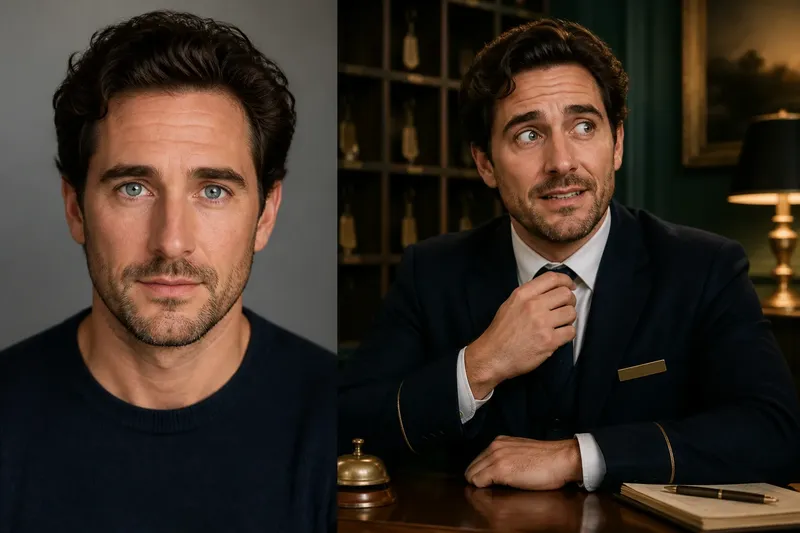
Say an actor is promoting a comedy about an immaculate but anxious hotel manager. A publicity portrait could use a neat jacket, a carefully arranged reception desk and a slightly strained smile; the image would suggest the project’s comic tension. The same actor’s headshot would leave the desk and character business out, keeping the face and expression easy to recognise. Both images can be well made, but they answer different questions.
Why do the clothes and background send mixed signals?
This often comes from treating styling as decoration rather than information. A dramatic costume may imply a role the performer is not currently promoting, while a busy background can make a supposedly candid portrait feel staged in the wrong way. The viewer may remember the velvet curtain or leather jacket and forget whose picture it is.
For a headshot, choose clothes that suit the performer’s professional presentation and do not overwhelm their features. For publicity, connect wardrobe and setting to the subject being promoted, then remove anything that suggests a different story. Check the image at thumbnail size as well as full size: if the background becomes the first thing noticed, simplify it or change the crop.
Colour and texture matter, but they need not be dramatic. A quiet wall, a chair or a familiar rehearsal-room detail can provide enough context. Props earn their place only when they clarify the project or the performer’s intended public image.
Which image belongs in a press kit, and which in a casting file?
A casting file generally needs an image that makes recognition straightforward and remains consistent with the performer’s current appearance. A press kit can use a publicity portrait that carries more mood and project-specific character. If a recipient needs both, provide both with clear filenames and labels rather than hoping they infer the distinction from the crop.
Check the brief from the recipient before selecting or commissioning either image. Some organisations specify framing, background, format or usage; those requirements should take precedence over personal preference. Where no direction is given, ask what decision the image is meant to support: identifying the person, or promoting the work.
What should you ask before choosing a portrait?
Should a headshot include a smile?
It can, if the expression feels natural and helps the performer appear recognisable. A neutral expression is also useful; the decision depends on the performer’s professional presentation and the image’s intended recipient.
Can one portrait serve as both a headshot and publicity image?
Sometimes a restrained portrait can do double duty, but it is a compromise rather than a rule. If the image needs to support both identification and promotion, keep the face clear and let only one modest project cue carry the publicity element.
Does a publicity portrait need a prop?
No. A location, wardrobe choice or expression can establish context without an object in hand. Use a prop only when it adds useful meaning instead of giving the performer another thing to manage.
How can you tell if the image is too theatrical?
Ask whether the pose or setting tells a story that distracts from the face and the image’s purpose. If the answer is yes, simplify the gesture or remove the detail that is doing the distracting.
How can you make the choice before the shoot?
Write a short brief that names the intended viewer, the image’s job and the one impression it should leave. Then choose pose, setting and clothing in that order. A headshot brief might ask for a clear, current likeness; a publicity brief might specify the project’s tone and the context that makes it visible.
That small distinction is the heart of the headshot or publicity portrait decision. Name the job, and the other choices become easier to judge: does this pose help someone recognise the performer, or does it help an audience understand what is being promoted? If a detail answers neither question, it is probably decoration with a lighting bill.